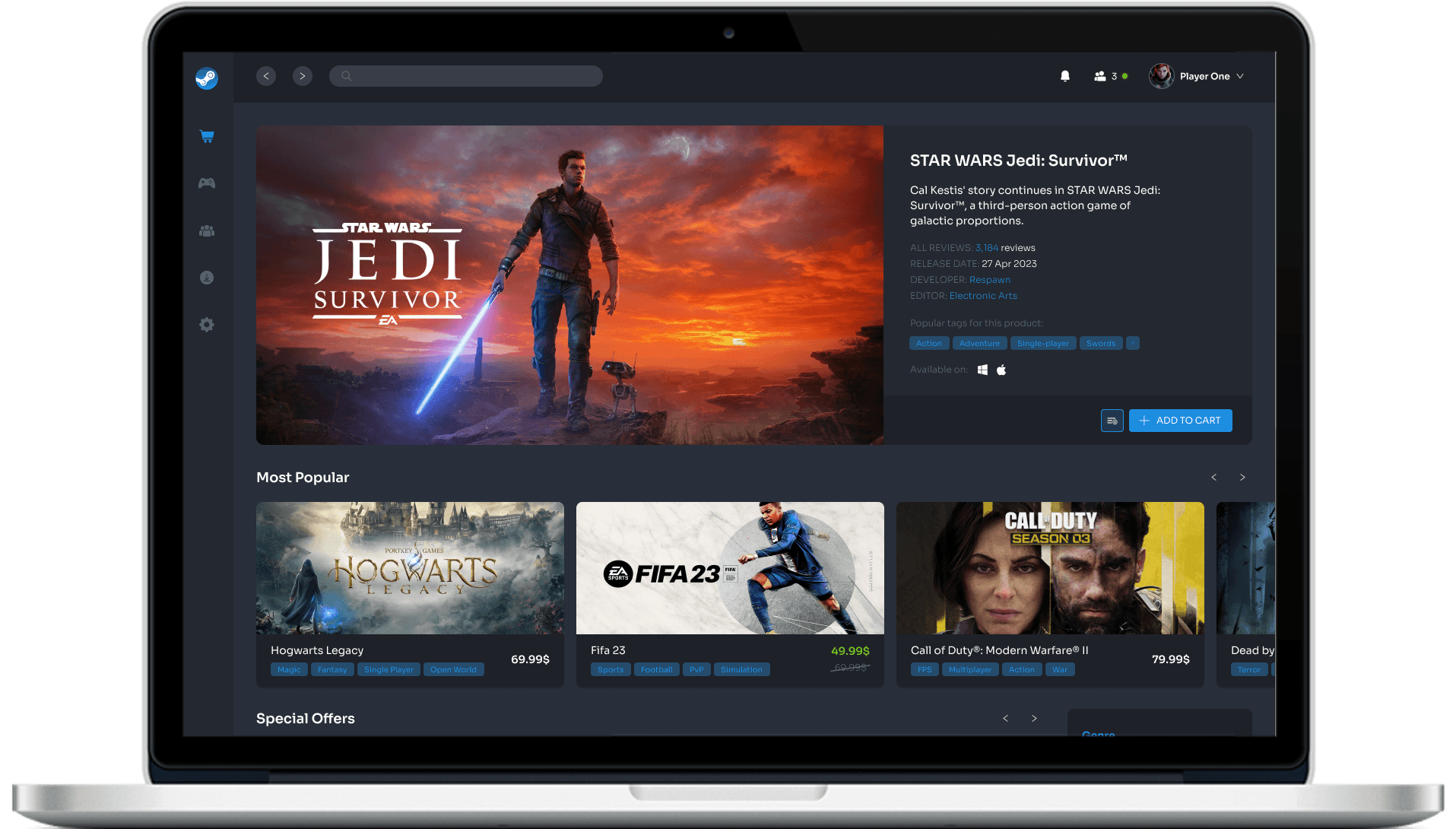
Steam
Role: UI Design (Free Work)
Year: 2023
Steam is a video-game digital distribution platform developed by Valve Corporation. It was launched in 2003 and offers anti-hacking protection, matchmaking servers, video streaming, and social networking services. It also provides the user with automatic installation and updates for games, as well as community features such as groups and friend lists, cloud saves, and in-game voice and chat functionality.
Context & Goals
Any user who has tried Steam surely knows that the new interface is stuck in the past. Online, we find many negative reviews and numerous studies and research focused on experience and interaction that demonstrate the latest update is uncomfortable for users.
The goal of this free project was to find and propose visual replacement solutions to address the new desktop mode update.
Before starting, the entire process and outcome were based primarily on my own judgment, as well as on the opinions of external users on the internet, the community platform, and my friends.
The research was conducted mainly digitally. I focused on gathering opinions from the official Steam community, external websites such as Reddit, and news and opinion forums geared toward the gaming community (HardZone, Mediavida, Geeknetic, among others), based on the desktop application's interface.
It was found that there is a backlash against the new update and interface, with blame placed on loading times and pop-up advertising clutter. There are also complaints about the new interface color, content boxes, and font size.
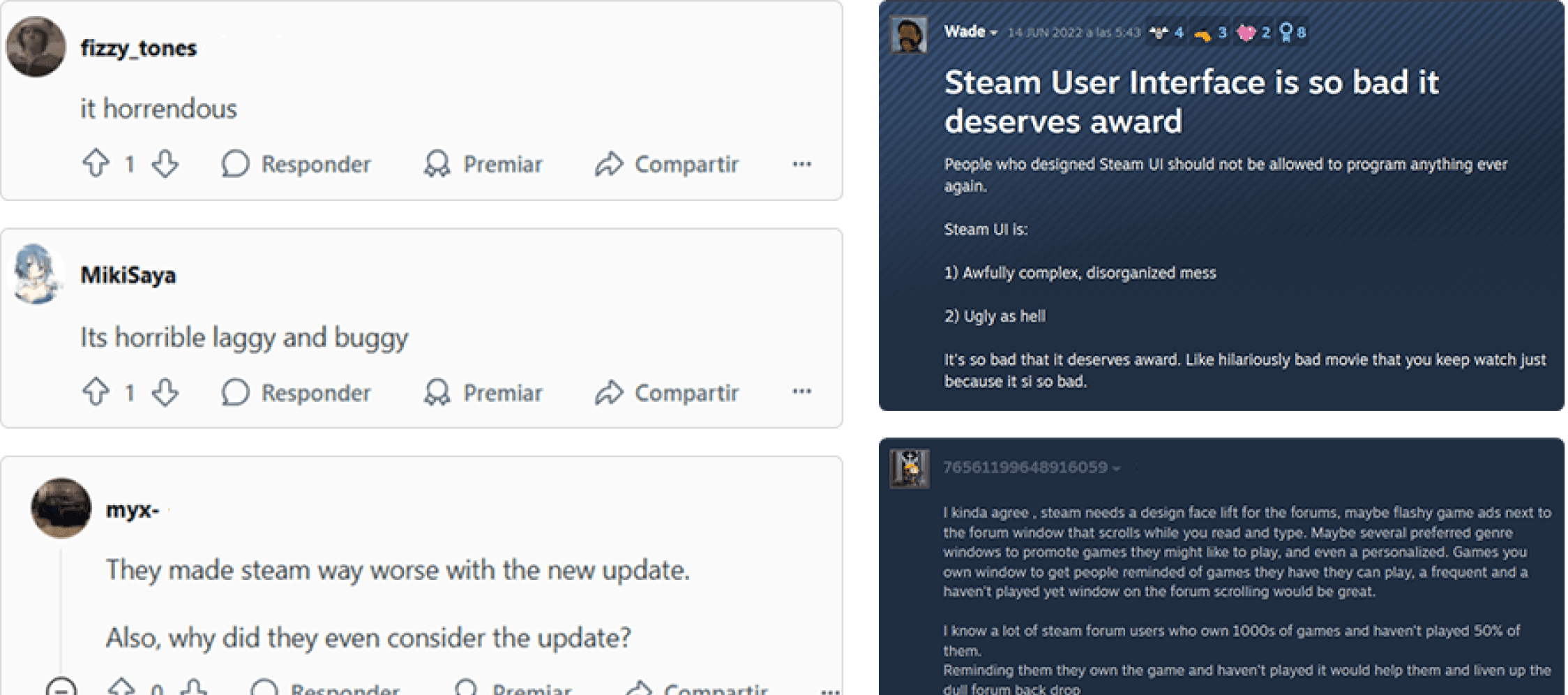
Additionally, through conversations, I received feedback from my brother and friends on the new interface. From this, I found that:
The interface still displays an outdated design and structure.
Too much text is scattered around, which is disorienting to the user.
Colors lack their own essence and appear dull.


Who is our user?
They are video game players (gamerz) looking for a platform for entertainment and to play with friends, and game developers who need a platform to distribute their creations. In general, this audience is broad, ranging from young people to adults interested in video games as a form of recreation.
To understand design trends, I relied heavily on the structures of the Epic and Origin platforms (direct competitors). I also referenced the aesthetics of apps like GOG, Ubisoft Connect, and Itch.io to get an idea of how design is handled and applied to components and items on these platforms.
Steam's main competitor, offering game sales and known for its exclusive titles like Fortnite and for regularly offering free games.
Video game distribution app developed by Electronic Arts (EA). Offering social features, cloud storage, and automatic patch downloads for EA titles.

Design
For the redesign, I decided to avoid drastic changes that could disrupt the visual and intuitive experience for the typical user. Instead, I focused on redesigning, organizing, and refining existing components.
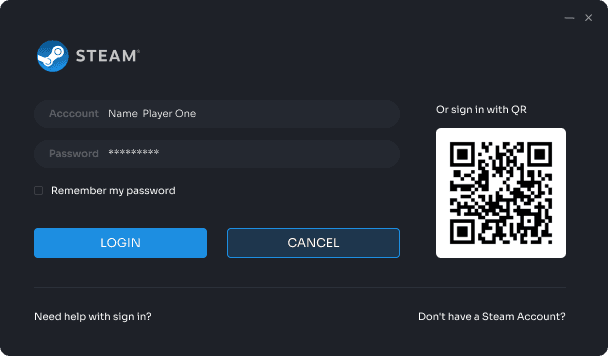

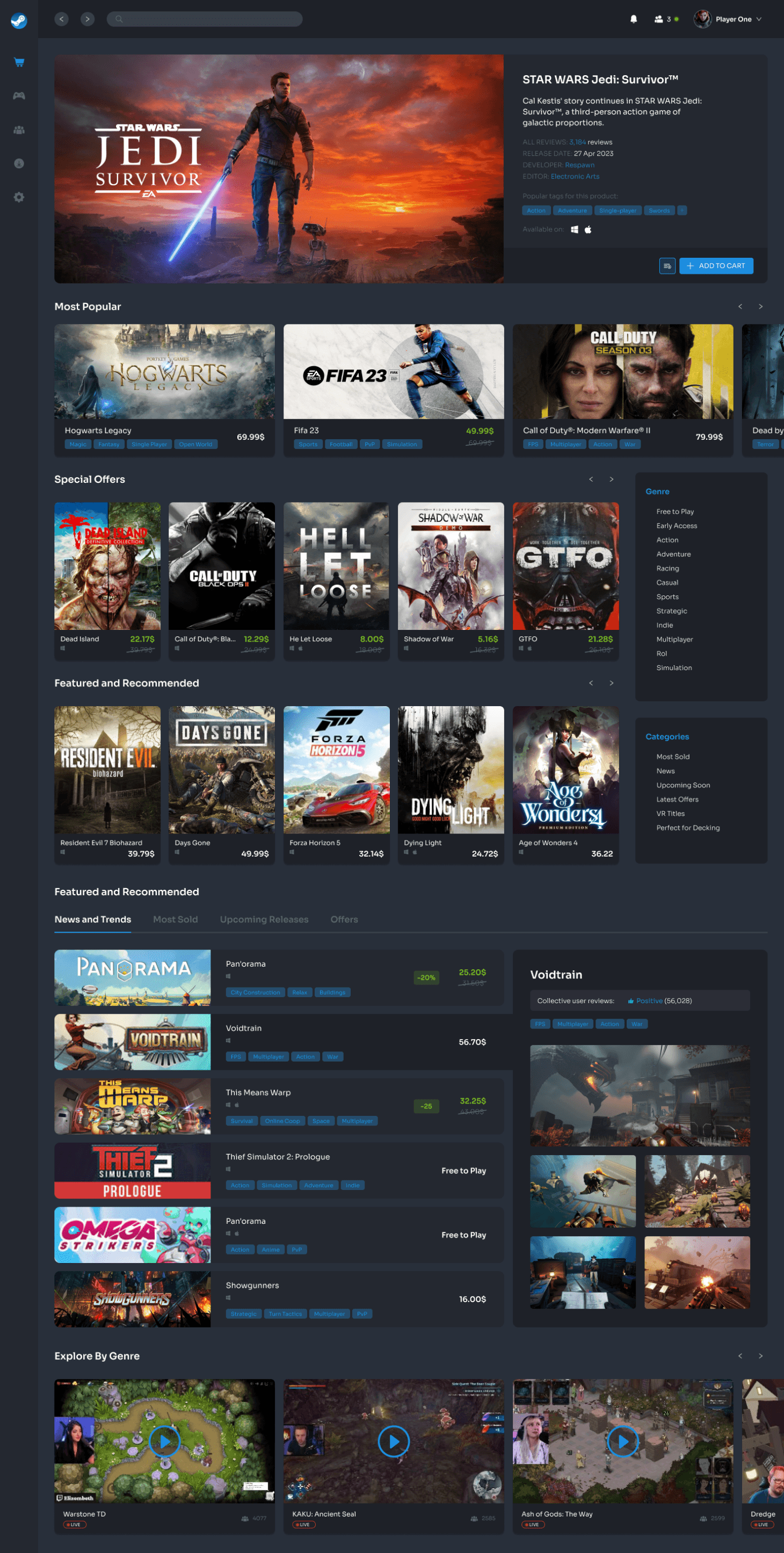



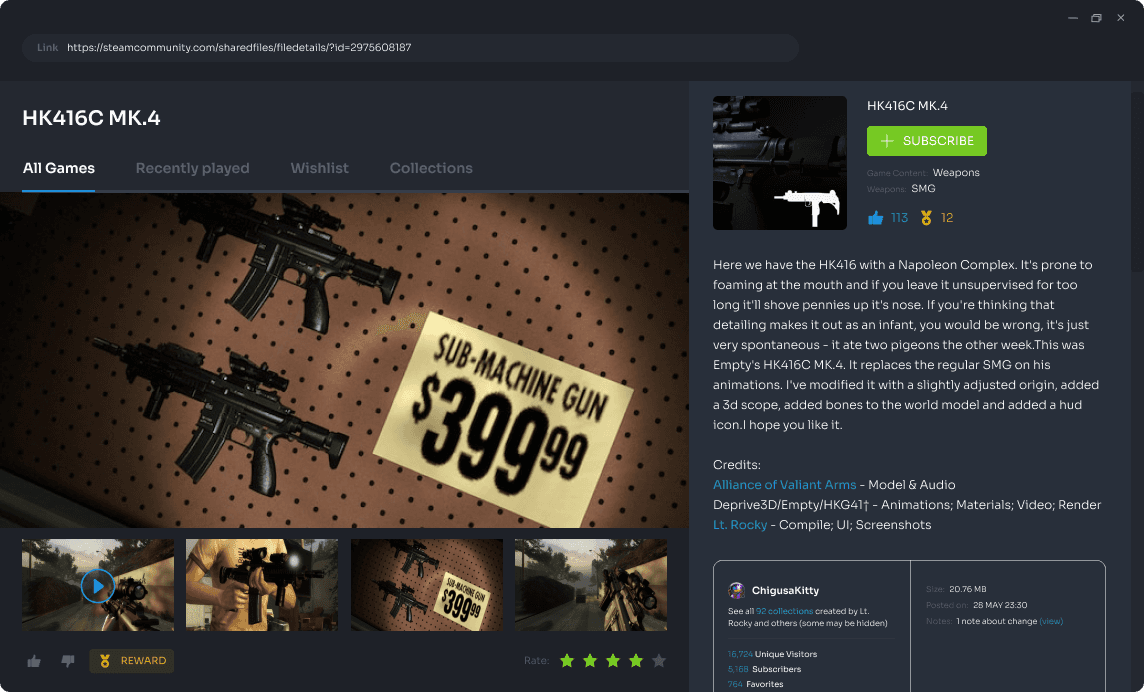
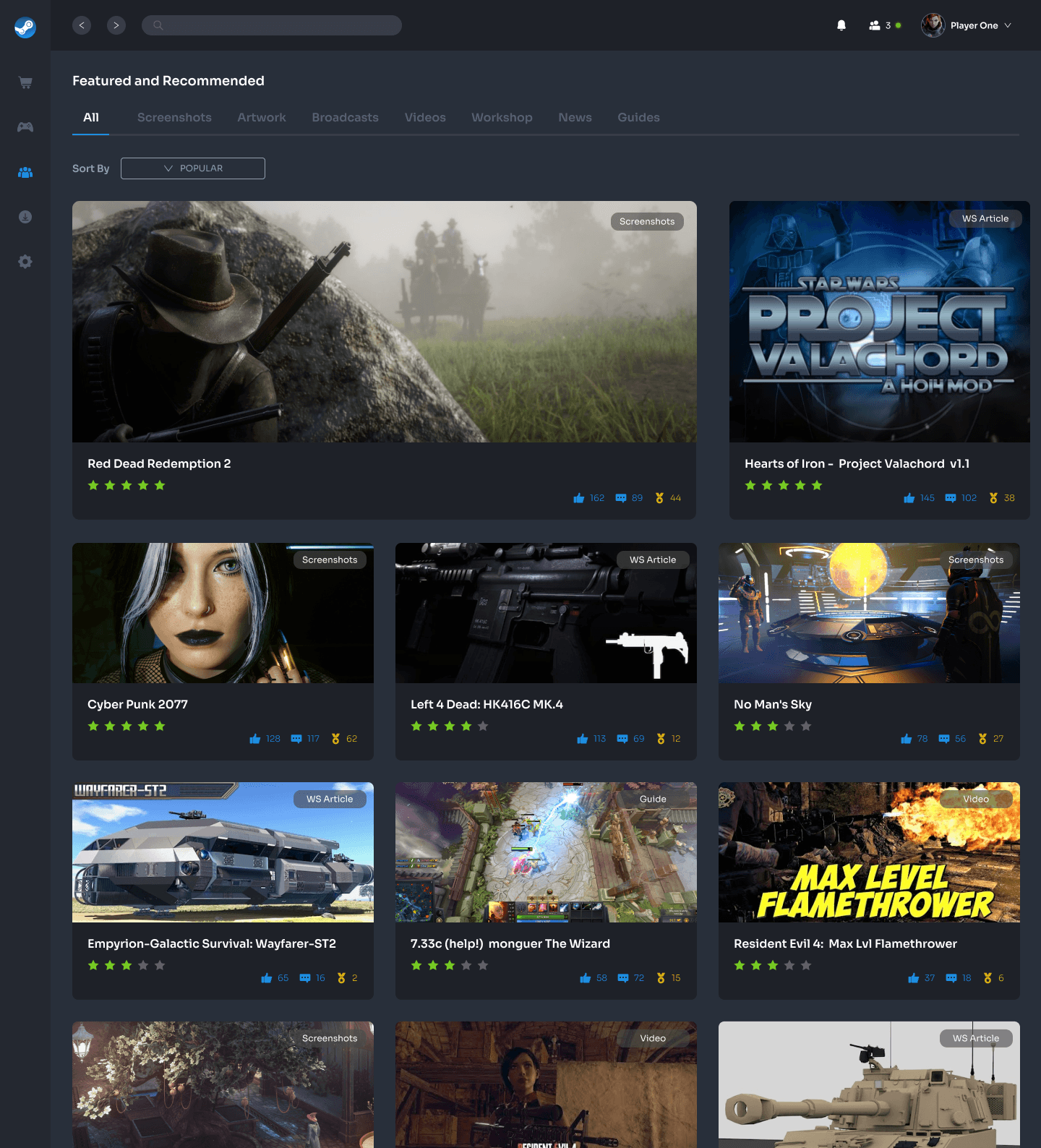
Gradient backgrounds and content boxes were replaced with flat colors, resulting in a cleaner, more contemporary aesthetic. Tabs became the primary way to structure information, reducing infinite scrolling, avoiding repetition, and facilitating faster, more efficient navigation.
I also optimized space by reducing the number of content boxes and limiting the variety of font sizes and colors to avoid visual clutter. Rounded edges were incorporated into most elements, and tags were redesigned with more playful shapes, adding dynamism to the overall look.


The grid was reorganized in retina mode to improve readability and offer a cleaner display. Finally, the modals and popups for downloads, chats, and articles were revamped entirely, adopting a more direct, visual, and user-friendly aesthetic.